Glass screen printing: a high-efficiency and durable surface decoration process
- Share
- Issue Time
- Jan 24,2026
Summary
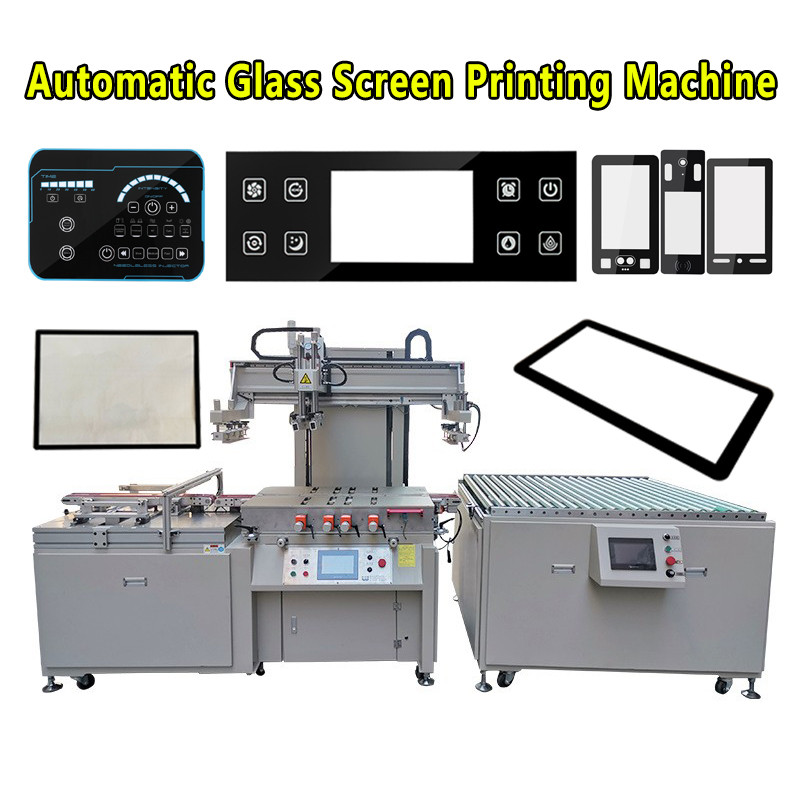
Glass screen printing is a surface decoration and functionalization process widely used in industries such as construction, home appliances, and automobiles. It precisely transfers ink to the glass surface using a screen to create durable patterns, text, or functional coatings. This article will systematically introduce the industrial characteristics, complete process, product advantages, and equipment usage precautions of this process.
I.Industrial characteristics
Glass screen printing boasts three major advantages: high efficiency in mass production, high pattern precision, and strong environmental adaptability. Traditional manual printing can only process a few dozen pieces of glass per day, while automated screen printing lines can handle hundreds of square meters per hour, significantly improving efficiency. Printing precision can reach ±0.1mm, meeting the stringent requirements of precision electronic glass (such as touchscreen bezels). Properly treated printed layers can withstand ultraviolet radiation, temperature variations, and humid environments, with a lifespan exceeding 20 years.
II. Process Flow
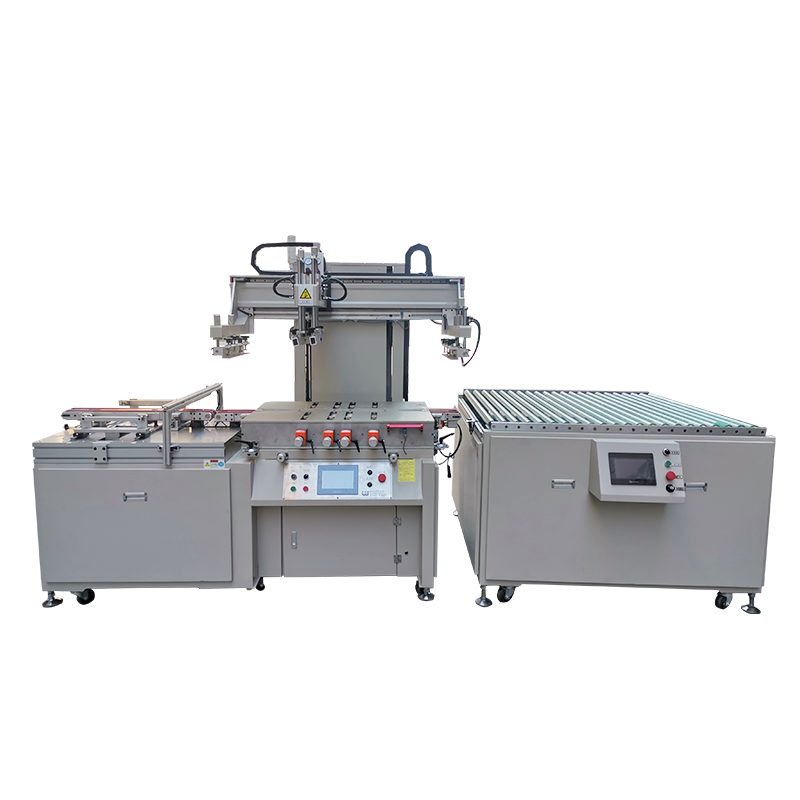
The complete process consists of five key steps:
Glass pretreatment: Clean the surface and, if necessary, perform acid etching or coating treatment to improve ink adhesion.
Screen making: A screen printing plate is made according to the design. The mesh count (usually 120-400 mesh) determines the printing fineness.
Ink formulation: Special glass inks require the addition of a curing agent, and color difference control must strictly adhere to the Pantone color chart standard.
Printing operations: The squeegee pressure (usually 0.3-0.6MPa) and angle (60-75°) need to be precisely controlled.
Curing process: Permanent curing is achieved in a high-temperature tempering oven (620-680℃), or UV curing is used for special inks.
III.Product Advantages
Products using this technology have four major advantages:
Exceptional visual performance: Enables special effects such as matte, glossy, and pearlescent finishes, enhancing the product's perceived quality.
Functional integration: Capable of printing functional layers such as conductive lines and anti-reflective coatings.
Economical and efficient: Compared to etching processes, the cost is reduced by approximately 40%, and no complex environmental treatment is required.
Environmentally friendly and safe: Modern water-based inks reduce VOC emissions by more than 90% compared to solvent-based inks.
IV.Equipment Usage Precautions
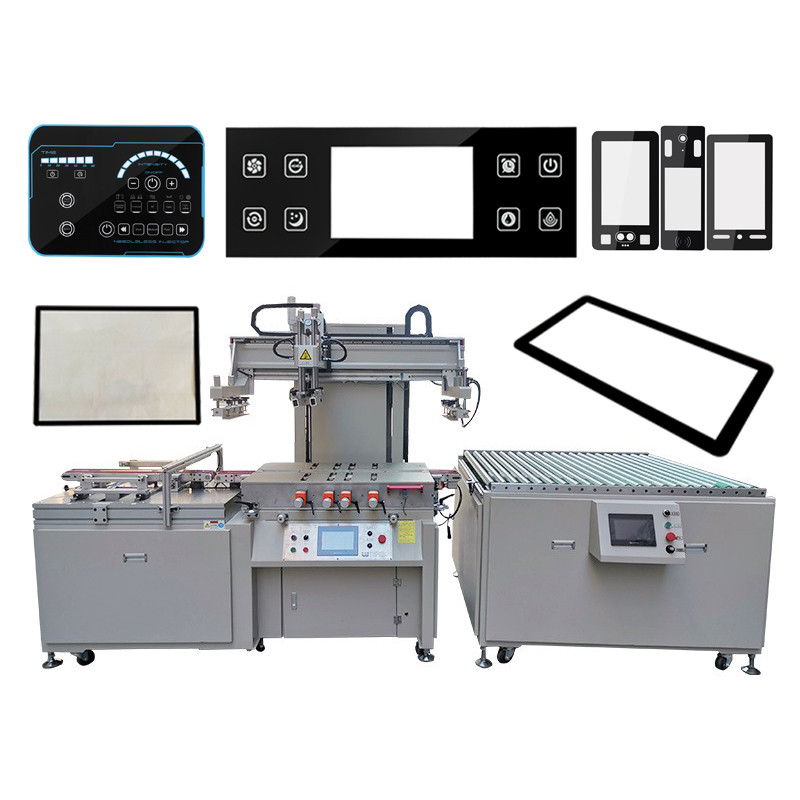
To ensure printing quality and equipment lifespan, special attention should be paid to the following:
Routine maintenance: The screen should be thoroughly cleaned after each operation to prevent ink from clogging the mesh.
Parameter monitoring: Real-time recording of workshop temperature and humidity (recommended 25±3℃, humidity 50±10%) to prevent changes in ink performance.
Safe operation: The curing oven's exhaust emissions must be tested regularly. Operators should wear heat-resistant gloves and safety goggles.
Equipment calibration: Check the screen tension weekly with a tension meter (maintain 20-25 N/cm), and check the parallelism of the scraper monthly.
Conclusion
Glass screen printing, as a mature industrial technology, is constantly innovating with the development of new materials and automation technologies. While maintaining its advantages of high efficiency and low cost, it is evolving towards intelligence and multi-functionality. Mastering its core process points and equipment management standards is of great significance for enterprises to enhance product added value and market competitiveness. In the future, the combination of this technology with digital printing will open up broader application prospects for glass decoration.
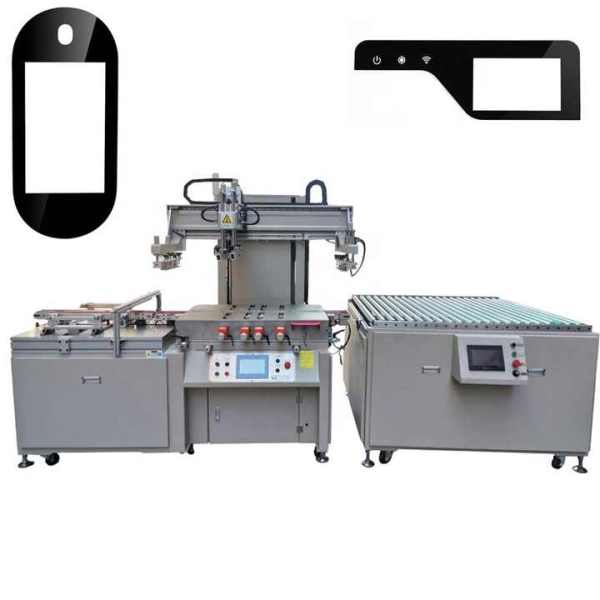
Flat glass silk screen printer is suitable for glass, such as glass panel, smart home automation glass, kitchen appliance glass etc.
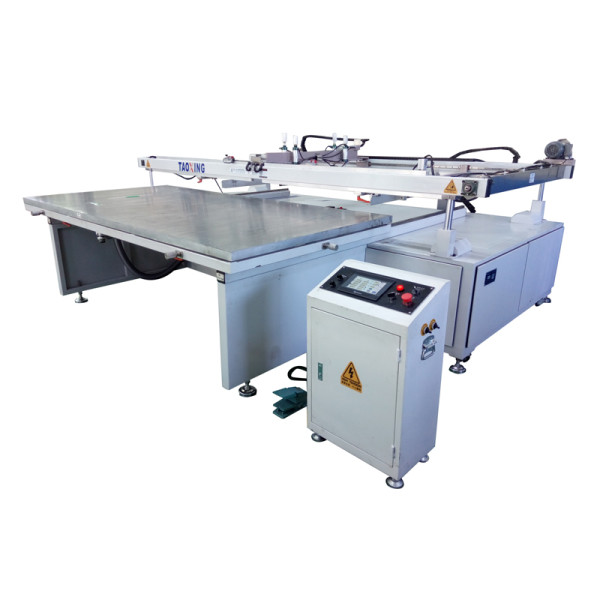
This large-scale glass screen printing machine can be used for large-scale product printing processes such as large-scale single-color glass printing, large-scale multi-color glass printing, etc. Since the work surface of this printing machine is very large, it is very suitable for some large-scale products to choose this type of machine.
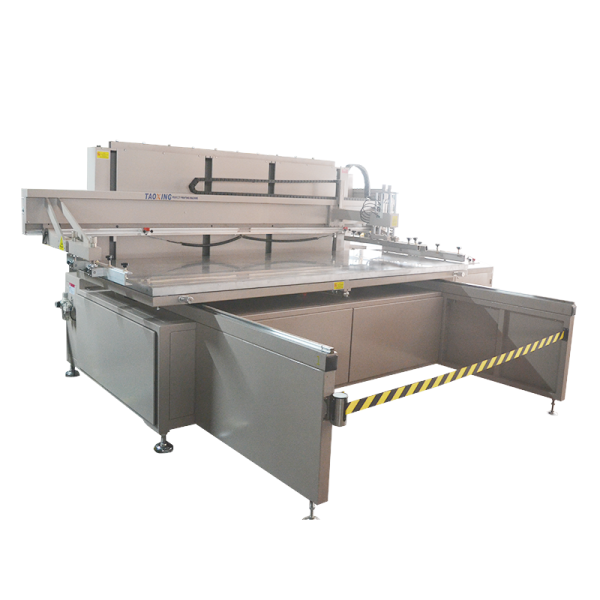
This automatic screen printing machine is applied for big size products printing, like paper, glass, PVC sheet, wooden board , and so on.Table moving function can make input &takeoff product more easy.
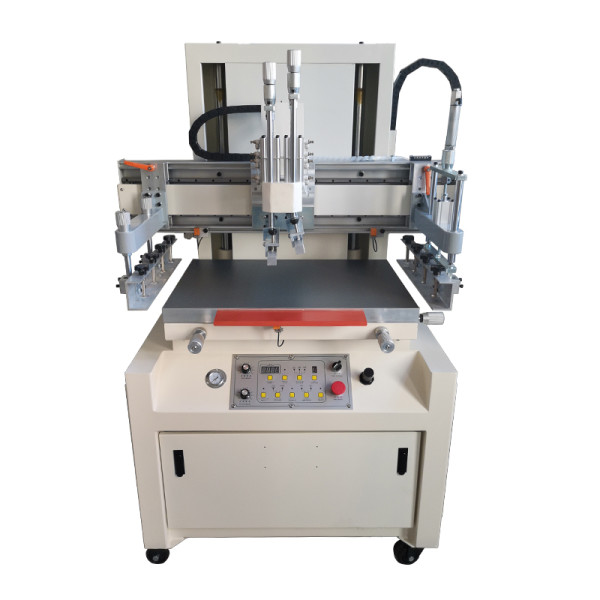
Transform your printing process with the TX-4060ST Semi-Automatic Flat Screen Printing Machine for paper and glass. Explore our OEM and wholesale services now!