Screen printing solutions for automotive rearview mirrors
- Share
- Issue Time
- Feb 4,2026
Summary
Screen printing on automotive rearview mirror lenses is a critical process for ensuring clear and durable markings. It is primarily used for printing brand logos, warning symbols, and other indicators, with its quality directly impacting both aesthetics and safety. Addressing industry pain points such as production efficiency, precision, and consistency, we present a highly efficient and stable screen printing solution.
I.The main technological challenges are concentrated in three areas:
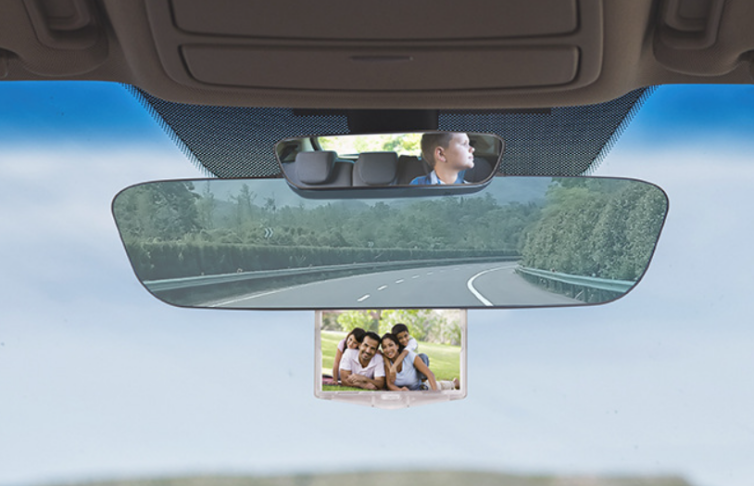
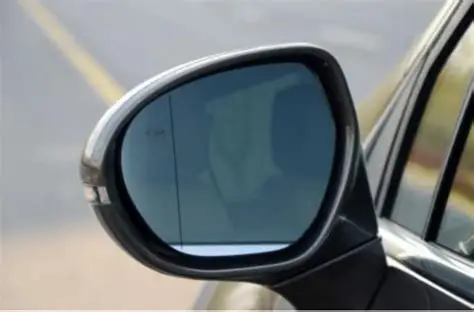
1. Rearview mirrors are mostly curved , which makes them prone to ink overflow, ink showing through the ink, and uneven edges during printing.
2. The lens surface is smooth and often has an anti-reflective coating, but the ink has poor adhesion and is easy to peel off or scratch .
3. In mass production , it is difficult to guarantee the precise printing position of each lens, resulting in poor consistency.
II. The corresponding solutions to the above difficulties are as follows:
1. Use a special curved screen printing plate, and customize the screen tension and mesh count according to the curvature of the lens. Pair it with a highly adaptable screen printing squeegee to ensure uniform ink transfer.
2. Special high-temperature resistant and high-adhesion inks are selected. Before printing, the lens surface is subjected to plasma treatment to remove oil and impurities and improve the ink adhesion.
3. Introduce positioning fixtures to accurately fix the lens position, and cooperate with semi-automatic equipment to achieve standardized operation and ensure printing consistency.
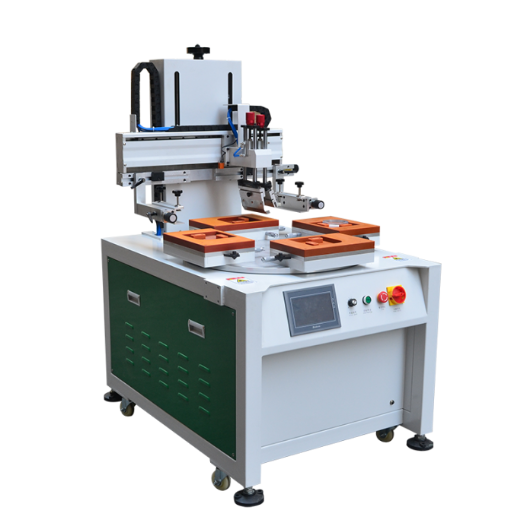
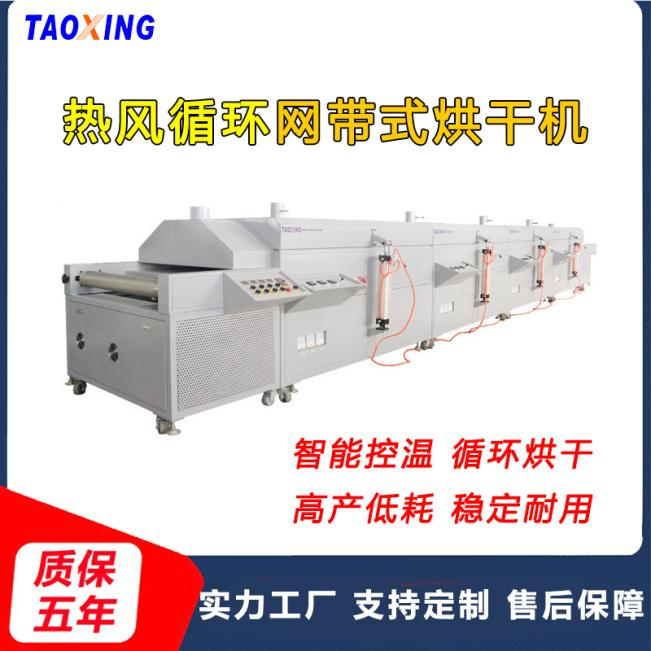
The core production equipment consists of an automatic rotary screen printing machine and an infrared dryer . The automatic rotary screen printing machine has a multi-station collaborative operation function, which can realize the simultaneous loading, printing and unloading, improving production efficiency. Its precise positioning system can effectively solve the problem of offset printing on curved surfaces. The infrared dryer adopts a constant temperature control system, which can quickly dry the ink and heat it evenly, avoiding ink cracking and discoloration, ensuring the stability of the printed layer, and meeting the rapid curing requirements after printing on rearview mirrors.
III.The printing process specifications are as follows:
1. Preliminary preparation: Cleaning and plasma treatment of the lenses, and adjusting the screen printing plate and equipment parameters;
2. Loading and positioning: Fix the lens in a special fixture and place it in the semi-automatic rotary screen printing machine station;
3. Screen printing: The equipment completes ink transfer according to preset parameters, and the squeegee pressure and speed can be finely adjusted as needed;
4. Drying and curing: Send the printed lenses into an infrared dryer and dry them at a constant temperature of 80-100℃ for 3-5 minutes.
5. Quality inspection of materials, checking printing effect, and rejecting unqualified products such as ink overflow and exposed base.
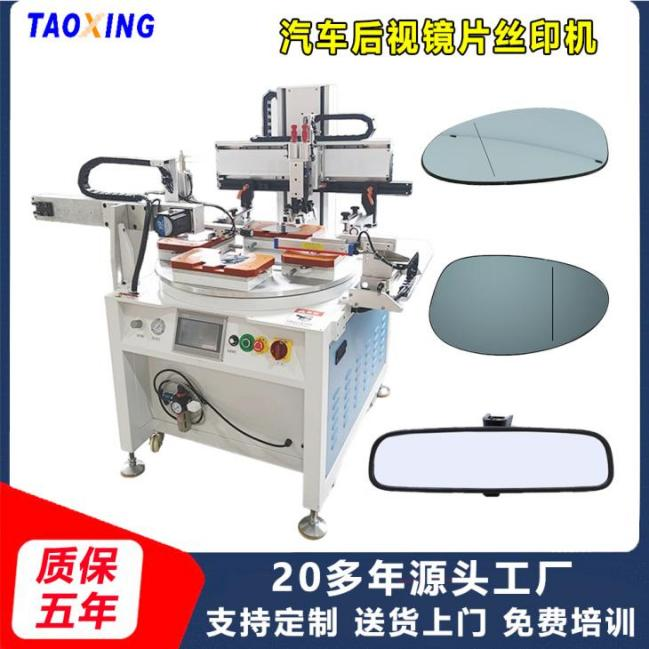
IV.Key points to note regarding operation :
1. Operators must wear gloves to avoid fingerprint contamination of the lenses;
2. Before printing, the screen height and squeegee angle must be adjusted to avoid scratching the lens surface;
3. The ink needs to be stirred at a constant speed to control the viscosity and avoid the formation of air bubbles;
4. The drying temperature should not be too high or too low to prevent lens deformation or incomplete ink curing.
V. Regular maintenance and upkeep of equipment should be carried out:
1. After each day's work, clean the screen printing machine's squeegee, rotary table, and remove any residual ink;
2. Inspect the equipment positioning system and transmission components weekly, add lubricating oil, and ensure smooth operation;
3. Clean the heating element of the infrared dryer monthly, check the accuracy of the temperature control system, and replace any damaged parts promptly.
4. Before long-term shutdown, the equipment must be thoroughly cleaned and rust-proofed to prevent parts from aging.
Conclusion.
This solution effectively addresses the core pain points in screen printing of automotive rearview mirror lenses, balancing production efficiency and printing quality, reducing defect rates, and is suitable for standardized production from small to large batches, providing reliable technical support for rearview mirror lens manufacturers.
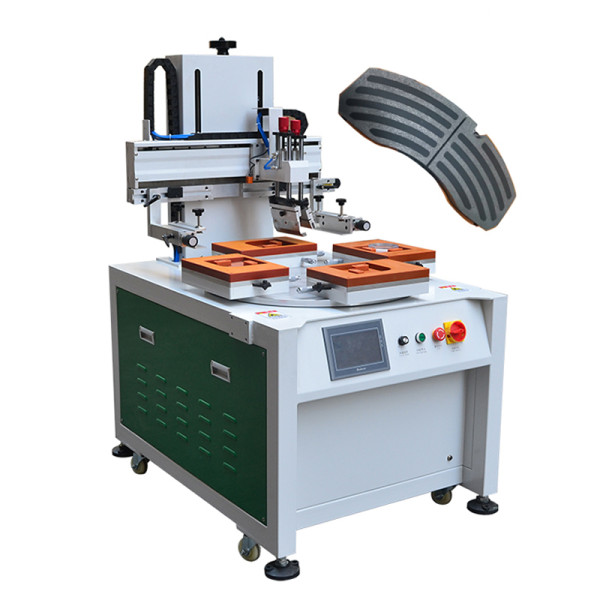
Screen printing of various thicknesses, specializing in screen printing of acrylic, glass, plastic panels and other products
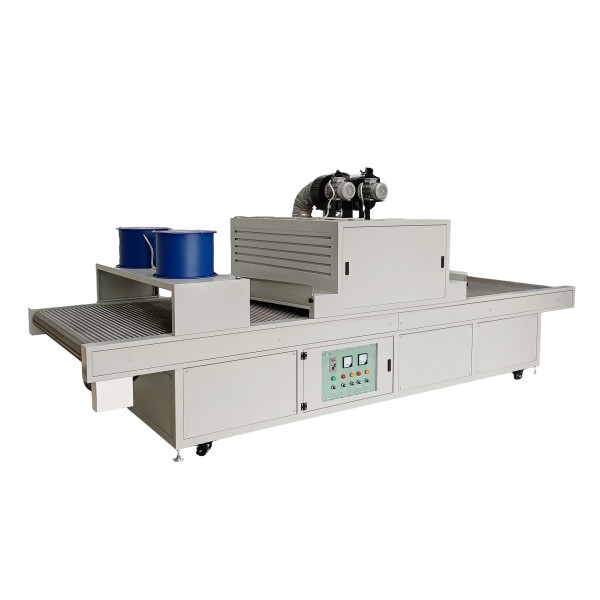
Taoxing Technology's large-format flatbed UV curing machine with high-power UV lamps enables uniform large-area irradiation, fast curing, low thermal damage. Equipped with intelligent dimming & efficient heat dissipation, it has flexible parameters for diverse processes, stable and easy to operate. Suitable for glass, metal, acrylic, etc., widely used in advertising, building materials, electronics, auto parts, printing & packaging for curing inks, coatings, adhesives, meeting industrial mass production needs.
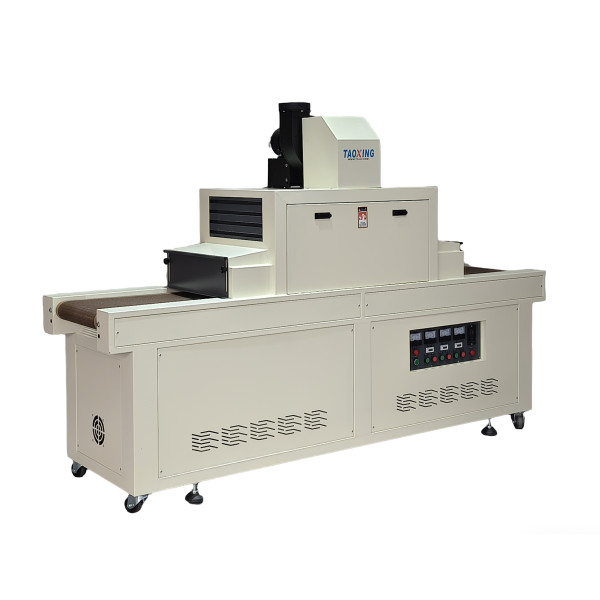
This UV curing machine is suitable for curing UV inks on medical supplies, mobile phone casings, membrane switches, electronic plastic casings, electronic components, LCD panels, terminal sealing, mobile phone component bonding, plastic component bonding, and LCDs.
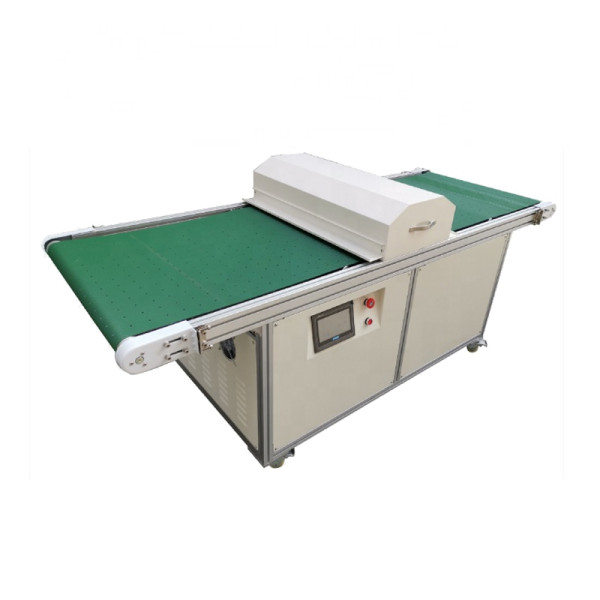
UV curing machine is mainly used for curing ink on printed products to improve the color fastness of the pattern.