The Real Cost Breakdown of Screen Printing: Where Ink, Screens, Energy, and Labor Money Goes
- Share
- Issue Time
- Oct 15,2026
Summary
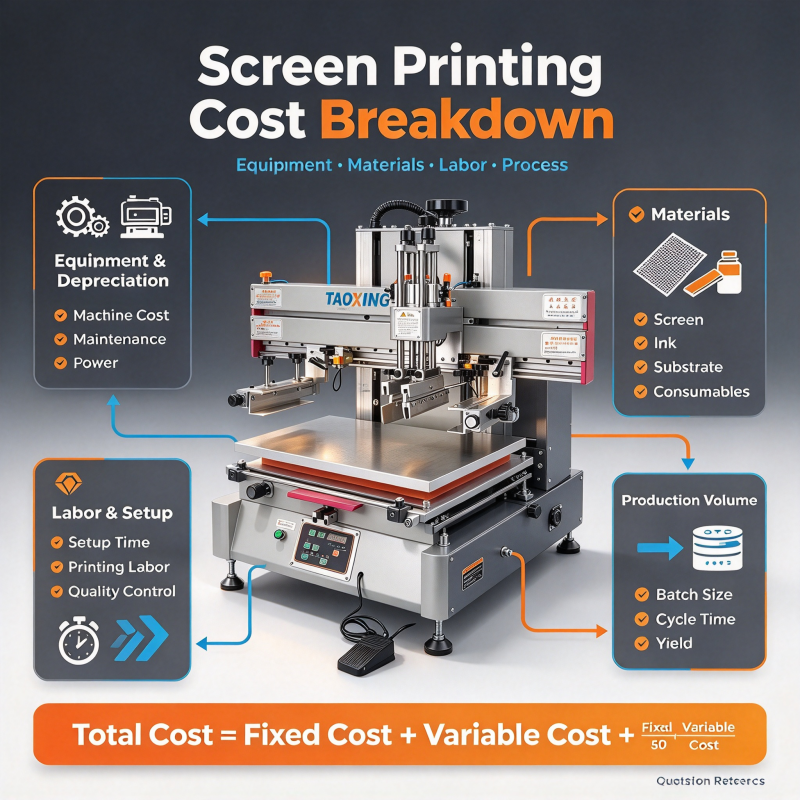
The hard costs of screen printing fall into four main categories: ink and consumables, screens, energy, and labor. The machine itself is a fixed one-time purchase, but these four keep flowing out continuously. Whichever link is poorly managed, profits get quietly eaten away.
1. Start with the Big Picture: Four Hidden Cost Streams Behind Every Screen Printer
The hard costs of screen printing fall into four main categories: ink and consumables, screens, energy, and labor. The machine itself is a fixed one-time purchase, but these four keep flowing out continuously. Whichever link is poorly managed, profits get quietly eaten away.
2. Ink: The Quiet, Never-Ending Consumption
Ink does not look expensive on its own, but it is used every single day. Solvent-based ink evaporates quickly and wastes a lot; water-based or UV inks cost a bit more per unit, but they transfer more efficiently and leave less residual ink. Taoxing screen printers are compatible with a wide range of inks, so switching ink types does not require major machine modifications—customers can flexibly switch based on cost.
3. Screens: How Often You Replace Them Can Double Your Costs
Screens are consumables—when tension drops or they clog, they must be replaced. Flatbed and curved-surface screen printers use different screen-making processes. When production volume is stable, it is recommended to keep a full screen library and centralize screen-making; the per-screen cost drops immediately. Do not wait until an emergency to make screens—rush fees are the most expensive.
4. Energy: Which Is More Efficient—Semi-Automatic or Fully Automatic?
Many people assume fully automatic uses more electricity, but the opposite is true. Semi-automatic screen printers rely on manual operation, and idle-running and standby losses are significant; fully automatic machines maintain stable cycle timing and start/stop on demand, so energy consumption per unit is actually lower. As volume scales, the energy advantage of fully automatic becomes increasingly obvious.
A semi-automatic machine needs at least one dedicated operator per unit, and multiple machines mean multiple workers; one person can oversee two or three fully automatic machines at once. The labor saved in a single month often covers a large chunk of electricity costs. When calculating costs, never overlook labor—it often burns through more money than ink.
6. Flatbed vs. Curved-Surface: Different Cost Structures
Flatbed screen printers print flat parts—tooling is simple and changeovers are fast. Curved-surface screen printers print around the curves of bottles and jars—registration and fixture requirements are high, and cycle time per piece is slightly longer. Use the right machine for the right job; forcing the wrong model raises scrap rates and doubles costs.
7. What Taoxing Has Done to Reduce Costs
Taoxing screen printers are optimized for closed-loop squeegee pressure control and low standby power consumption—the goal is to bring down the total cost per printed piece. A stable machine with a low scrap rate is itself the biggest money-saver.
8. Choose the Right Manufacturer, Keep Hidden Costs Low
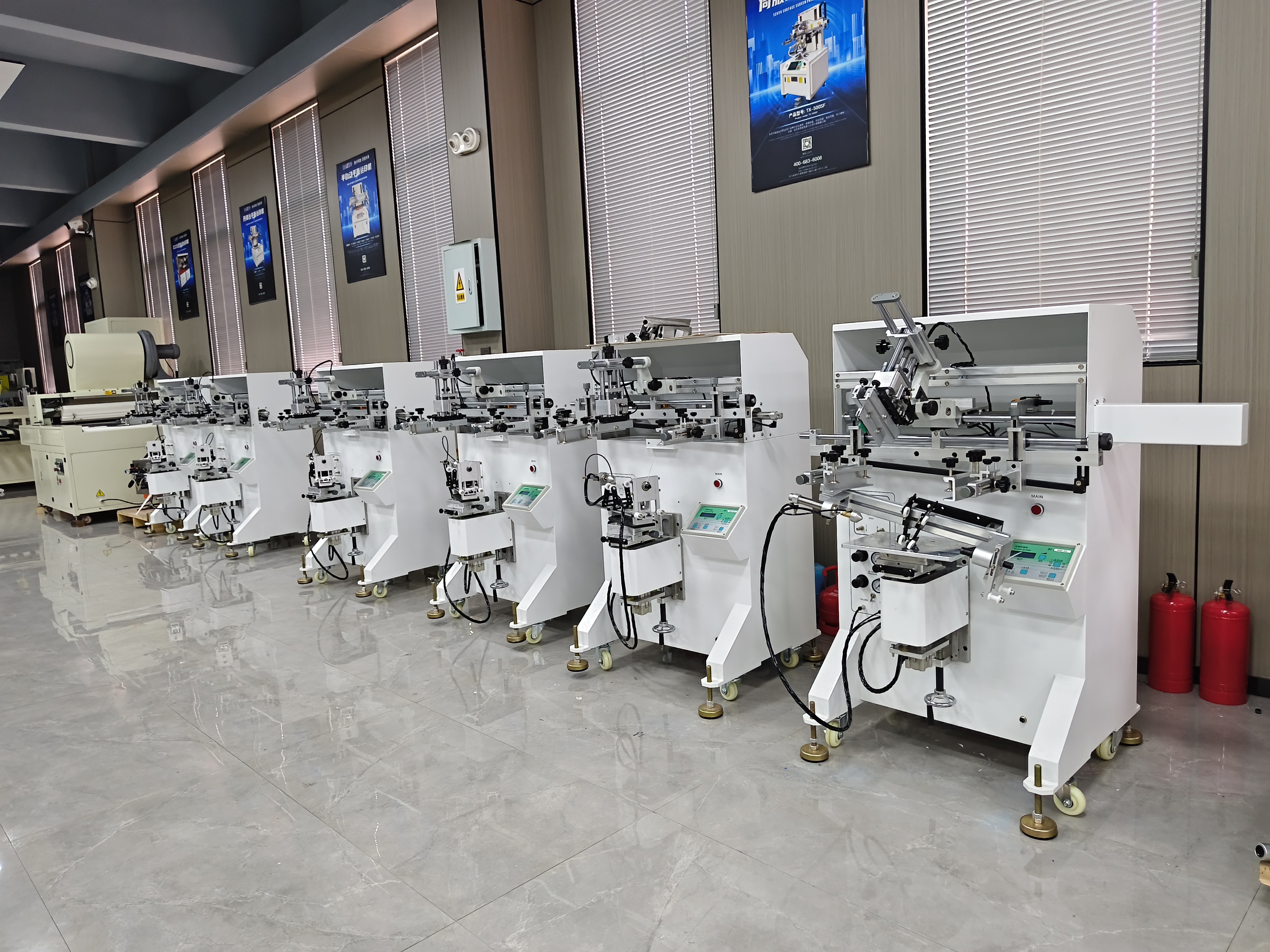
A reliable screen printer manufacturer does not just sell and disappear—they help with production line layout, consumable selection, and remote troubleshooting. One faster day of after-sales response means one less day of downtime loss. Before signing the contract, clarify spare parts pricing and lead times; do not let hidden costs blow up later.
9. Three Moves to Compress Screen Printing Costs
(1) Choose the right ink to maximize transfer rate.
(2) Centralize screen-making and build a screen library.
(3) Go fully automatic instead of stacking operators. Implement these three moves, and total cost typically drops noticeably.
10. A Cost Self-Check List: Save Money by Checking Off
(1) Is the ink type optimal?
(2) Are screens made centrally?
(3) Is standby power consumption too high?
(4) Is the labor ratio reasonable?
(5) Does the machine match the product?
(6) Is manufacturer after-sales adequate?
(7) Is the scrap rate under control?
(8) Are spare parts prices transparent? Run through all eight—where money is leaking becomes clear at a glance.