Top 10 Bottle Printing Equipment Manufacturers (2026 Guide)
- Share
- publisher
- CooPrinter
- Issue Time
- Sep 2,2026
Summary
Looking for reliable bottle printing equipment? Compare the world's top screen printing, pad printing and digital bottle printing machine manufacturers from Germany, Italy, Japan, Switzerland, the USA and China - including a full profile of CooPrinter.
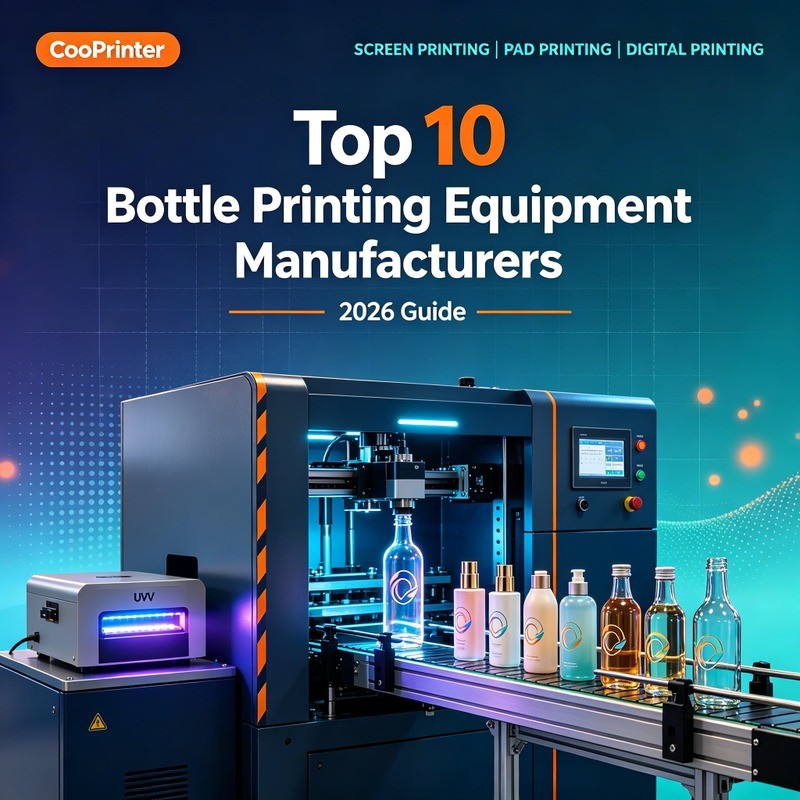
Why Bottle Printing Equipment Matters
The bottle is more than a container - it is a billboard for your brand. In the beverage, cosmetics, pharmaceutical and home-care industries, the decoration on a glass or plastic bottle is often the first thing a customer touches and remembers. Sharp logos, durable multi-color graphics and compliant coding can lift perceived value, support premium pricing and drive repeat purchases.
Behind every beautifully decorated bottle is a piece of precision equipment. Three technologies dominate the market: screen printing for high-speed, single-purpose decoration on cylindrical containers; pad printing for curved and irregular surfaces; and digital inkjet printing for variable data and short runs. Choosing the right machine - and the right manufacturer - determines your print quality, uptime, unit cost and long-term competitiveness.
This guide reviews ten of the world's leading bottle printing equipment manufacturers, from German engineering powerhouses and Italian craftsmen to Swiss and Japanese precision specialists and one-stop Chinese producers. We compare their strengths, representative machines and ideal use cases, then walk you through a practical selection framework. Whether you decorate beer bottles, cosmetic vials, pharmaceutical containers or reusable cups, you will find a shortlist worth evaluating.
Top 10 Bottle Printing Equipment Manufacturers at a Glance
1. Koenig & Bauer Kammann GmbH - Germany
With more than 65 years of experience, Koenig & Bauer Kammann (Kammann) is widely regarded as the world's most innovative manufacturer of container glass decorating machines. Headquartered in Löhne, Germany, and part of the Koenig & Bauer group, the company designs and builds screen printing systems for glass, plastic and metal containers.
Its portfolio covers the high-speed HS 300 family for round beer and soft-drink bottles (up to 300 articles per minute with ceramic thermoplastic inks), the flexible K15 servo-driven universal machine for virtually any item shape, the modular K20 CNC family, and the K1 series for smaller lot sizes with ceramic or UV inks. If your priority is maximum uptime on high-volume glass bottle lines, Kammann is the benchmark - with a corresponding investment cost.
2. OMSO S.p.A. - Italy
Based in Reggio Emilia, Italy, OMSO offers one of the most complete ranges of automatic screen printing machines for bottles and tubes in plastic or aluminium. The company supports screen printing, dry-offset, flexography and digital printing, covering everything from simple logos to photo-quality reproductions.
For bottle decorators, the Servobottle series prints up to ten UV colors on cylindrical, elliptical and flat containers; the SB021.25 combines one to three colors with hot stamping; and the Imprex and Novax M machines deliver up to six and eight colors respectively. OMSO is an excellent fit for cosmetics and beverage producers who need multi-format flexibility across different container shapes.
3. Sakurai Graphic Systems Corporation - Japan
Sakurai, headquartered in Gifu, Japan, is a long-established manufacturer of screen and offset printing presses renowned for precision and reliability. Its direct servo drive fully automatic cylinder press, the MS-DDS, delivers high precision, high productivity and easy operation for cylindrical container printing.
Japanese engineering and tight registration control make Sakurai a strong choice for premium packaging, label printing and applications where print resolution and layer-to-layer accuracy cannot be compromised.
4. SPS TechnoScreen GmbH - Germany
From its base in Wuppertal, Germany, SPS TechnoScreen develops high-tech screen printing systems for technically demanding decoration tasks. As a specialist rather than a generalist, SPS focuses on precision engineering and process reliability for containers and industrial components.
Choose SPS when your application demands German engineering with a strong focus on screen technology, process documentation and repeatable print quality.
5. TOSH srl - Italy
With more than 6,000 installations and 100% Made-in-Italy production, TOSH (based near Milan) has been a reference brand in pad printing for over thirty years. Its Logica series pad printers - built around the hermetic ink-cup system - are known for clean, repeatable marks on cosmetic containers, closures and a wide range of plastic parts. The PadFoil solution even combines pad printing with die-less foil stamping in a single machine.
TOSH also pioneered single-pass digital printing for cylindrical objects with its Jetto UV inkjet line, bridging the gap between conventional pad printing and fully digital decoration. It is an excellent partner for cosmetic and packaging decorators who want both technologies under one roof.
6. Teca-Print AG - Switzerland
From its base in Wuppertal, Germany, SPS TechnoScreen develops high-tech screen printing systems for technically demanding decoration tasks. As a specialist rather than a generalist, SPS focuses on precision engineering and process reliability for containers and industrial components.
Choose SPS when your application demands German engineering with a strong focus on screen technology, process documentation and repeatable print quality.
7. Inkcups - United States
Inkcups delivers high-performance pad printing and digital inkjet solutions for direct-to-object printing on virtually any surface. Its award-winning cylindrical inkjet printers - including the Helix and the X5-T High Throw for handled mugs and tall items - make it easy to produce seamless wraps, gradients and photo-quality images around a bottle.
With more than 2,000 systems installed worldwide and supporting tools such as the Flamer 360 pretreatment system, Inkcups is a strong option for short-run customization, promotional bottles and producers who want to move from labels to true direct printing.
8. WIFAG-Polytype - Switzerland
WIFAG-Polytype's polytype brand is a recognised leader in digital printing of bottles. The DigiBottle machine prints directly onto round plastic bottles without printing plates, enabling variable data so that 'each bottle can be different.
If your business model depends on personalization, mass customization or one-to-one marketing campaigns - serial numbers, names, QR codes or changing artwork on every bottle - DigiBottle turns decoration into a competitive advantage at production speed.
9. Krones AG / Dekron - Germany
Krones is a leading manufacturer of packaging and filling technology worldwide, and its Dekron subsidiary focuses on digital decoration. The DirectPrint technology integrates inline digital printing directly into high-speed beverage filling and packaging lines.
For large beverage plants that already run Krones equipment, Dekron's inline digital printing offers seamless integration, minimal footprint and the ability to print variable content without slowing the line.
10. CooPrinter - China
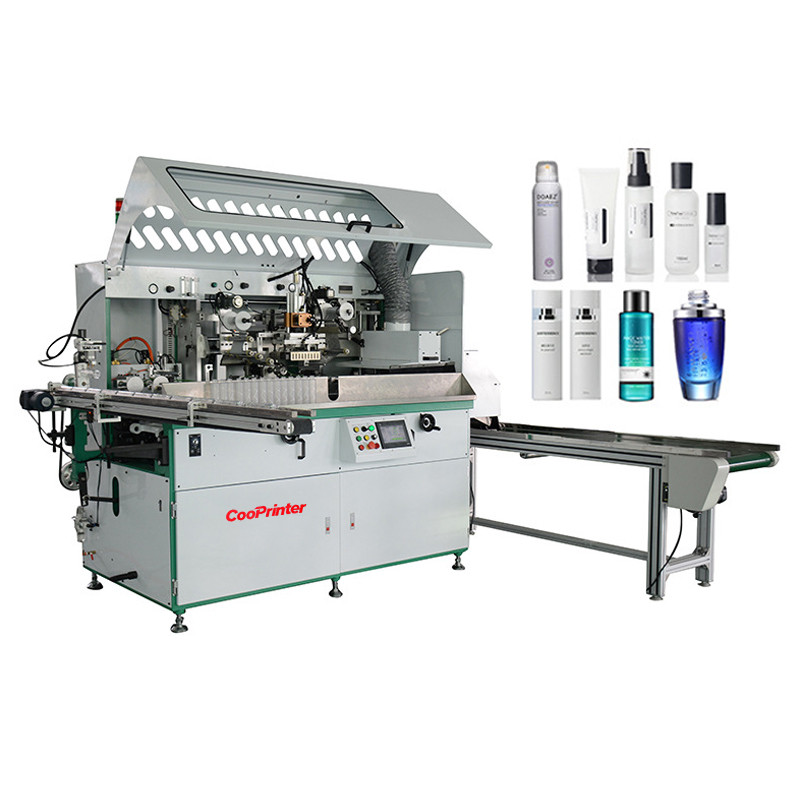
Closing our list, CooPrinter is a one-stop Chinese manufacturer of bottle decoration equipment, part of the Hangzhou Taoxing group with production in Jiaxing, Zhejiang. Unlike single-technology specialists, CooPrinter designs and builds the complete chain: automatic and semi-automatic screen printing machines for cylindrical, flat and non-woven surfaces; cosmetic bottle screen printing equipment; pneumatic single-color ink-cup pad printing machines; UV curing machines; infrared drying tunnels; and multi-layer drying racks.
This end-to-end approach lets cosmetics, daily-chemical and beverage producers build a complete decoration line from a single accountable supplier - coordinating the printer, the curing unit and the drying stage so that process parameters match. Combined with cost-effective pricing, short lead times and flexible customization, CooPrinter is particularly attractive for mid-size manufacturers who want dependable output at a competitive cost, with responsive service.
From L-type dual-servo flat screen printers to UV curing and infrared drying systems, CooPrinter helps customers print, cure and finish in one continuous workflow - a practical choice for producers who want to consolidate their bottle decoration process under one roof.
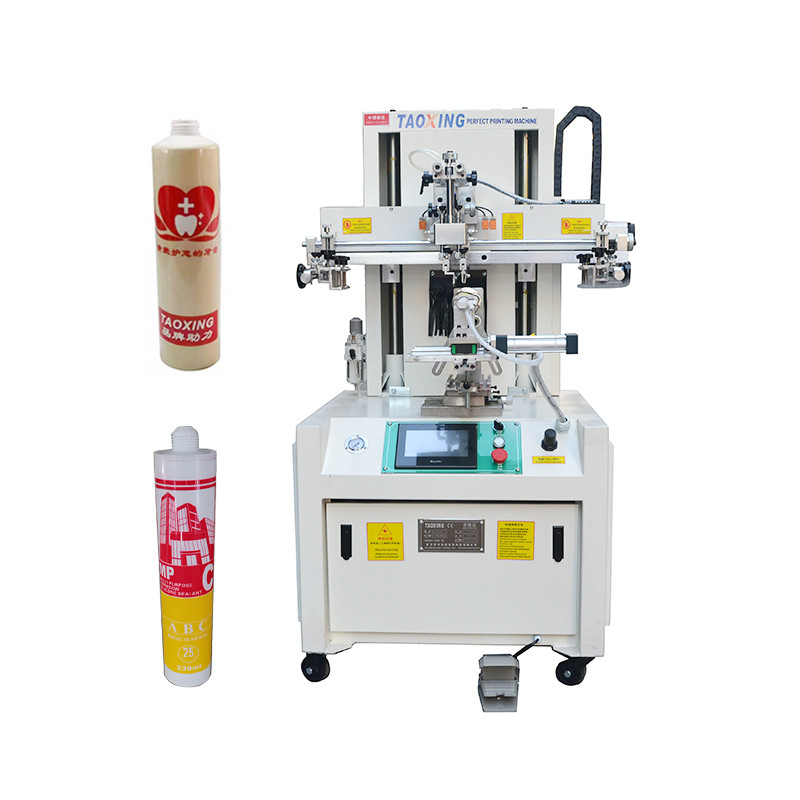
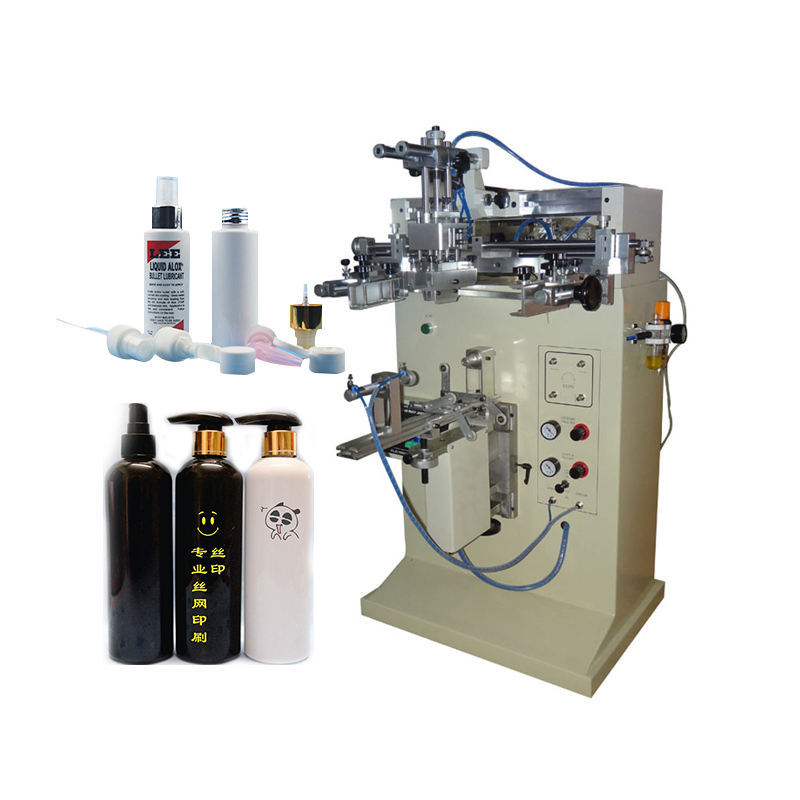
With such a wide range of suppliers, the best choice depends on your product, production profile and budget. Work through these factors before requesting quotes:
1.Substrate and geometry. Glass, plastic or metal? Round, oval, tapered or flat? Screen printing suits stable cylindrical formats; pad printing handles curves and irregular surfaces; digital printing is flexible across formats.
2.Colors and print area. A single-color logo calls for a very different machine than a 6-10 color decoration. Confirm the print area you actually need - pad printing covers up to roughly 25% of a bottle's circumference, while rotary digital printing can wrap the whole bottle.
3.Production volume. High volumes favour fully automatic screen printing (hundreds of pieces per minute); low-to-mid volumes favour semi-automatic machines or digital printers with fast changeover.
4.Process reliability. UV curing, infrared drying and proper flame or plasma pretreatment are just as important as the printer itself. Buy them from one supplier to avoid compatibility issues.
5.Total cost of ownership. Include tooling (screens, pads, plates), consumables (inks), energy, maintenance and spare parts - not just the purchase price.
6.Service and support. Global manufacturers offer in-house service; one-stop Chinese suppliers typically offer faster response and competitive labour costs. Verify installation, training and spare-parts availability in your region.
Frequently Asked Questions
Q: What is the best printing technology for glass bottles?
A: For high-volume, long-run glass bottle decoration, automatic screen printing with UV or ceramic inks is the industry standard - machines such as Koenig & Bauer Kammann's HS 300 reach up to 300 bottles per minute. For short runs or variable data, digital inkjet (WIFAG-Polytype, Dekron) is the better choice.
Q: What is the difference between screen printing and pad printing for bottles?
A: Screen printing pushes ink through a stencil mesh and is ideal for flat or gently curved surfaces with large, bold graphics. Pad printing transfers ink from a plate onto a silicone pad, which then prints onto curved, recessed or irregular surfaces such as bottle caps, closures and cosmetic containers. Many bottle decorators use both technologies.
Q: Can digital printing replace screen printing for bottles?
A: It depends on the application. Digital printing shines for short runs, multi-SKU work, personalization and photo-quality wraps with no tooling. Screen printing remains more economical at very high volumes with one stable design. Many producers combine both, and hybrid suppliers such as TOSH, Inkcups and CooPrinter offer complementary technologies.
Q: How much does a bottle printing machine cost?
A: Prices range widely: semi-automatic screen or pad printing machines may start in the low thousands of US dollars, fully automatic multi-color systems from European manufacturers can run into six or seven figures, and Chinese one-stop lines offer the most competitive price-performance for mid-size producers. Request itemized quotes with tooling and installation included.
Q: What should I look for in a cosmetic bottle printing line?
A: Beyond the printer, evaluate UV curing and infrared drying quality, screen and pad tooling, registration accuracy on small round containers, and changeover time between bottle formats. A single accountable supplier (such as CooPrinter) that integrates printing, curing and drying simplifies commissioning and troubleshooting.
Q: Semi-automatic or fully automatic bottle printing machine?
A: Choose semi-automatic when volumes are low, formats change often and budget is limited. Choose fully automatic when you need consistent throughput above roughly 30-60 pieces per minute and want to reduce labour cost per piece.
Final Thoughts
The right bottle printing equipment turns a standard container into a brand asset. German and Italian leaders such as Kammann, OMSO, TOSH and SPS define the premium benchmark; Swiss and Japanese specialists such as Teca-Print and Sakurai deliver precision; American and Swiss digital pioneers such as Inkcups, WIFAG-Polytype and Dekron unlock personalization; and one-stop Chinese producers such as CooPrinter deliver complete lines at a competitive cost.
Start by defining your bottle material, shapes, color needs and volumes, then shortlist two or three manufacturers from this list and request a comparative quote. If you want a single accountable partner for your entire decoration line - from screen and pad printing to UV curing and drying - talk to the CooPrinter team and see how the complete workflow performs on your bottles.